

Current Status
Price
Get Started
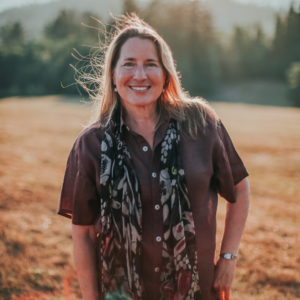
with Holly Pruett
Click to Learn More about the Presenter
Dates: March 5, 12, 19, 26 | April 2, 9
Time: 7pm – 8:30 pm ET
Befriending mortality can be seen as a spiritual quest, a psychological assignment, a philosophical riddle, or a culture making undertaking. In this six-part series we approach the fact of our deaths as a subject for learning.
Holly J. Pruett’s “Befriending Mortality” course, already popular in the Pacific Northwest where she has been a deathcare practitioner for two decades, is now available online to the Rowe community. Dedicated to democratizing information and rebuilding our collective knowledge base around how we care for our dying and our dead, each session engages poetry, stories, big questions, and nitty gritty details. It is an opportunity – with a tender, experienced, and clear-eyed guide – to explore what a consequential and practical relationship with mortality might look like for you and your people.
Holly is a kind of a secular chaplain who for years has been braiding, at bedsides and in community spaces, practices, and principles for those of us who find ourselves culturally bereft when it comes to how we die and care for our dying and our dead. In the absence of intact multigenerational understandings, most of us are dependent on outsourcing or avoiding most of this terrain. The spiritual and consumer marketplaces offer lots of quick fixes to resolve or diminish the dilemmas of death. This course inhabits the dilemmas while providing detailed wayfinding information and worthy companions.
These six online classes of 90 minutes cover a sequence of topics. We open with an invitation to reconsider how you view mortality and close with a framework for both individual and community planning. In between, the group will confront the reality that our bodies will eventually need to be disposed of; survey the contemporary landscape from diagnosis to death; detail what happens (or not) between death and disposition; and explore how we tend to (or not) the work of bereavement and remembrance. Recordings of the sessions and extensive resource materials are available for participants.
- Session 1: Befriending Mortality – What happens when we approach death as a teacher? Might we learn better how to care for the dying in our midst, to live in the presence of our mortality, to relate to our dead as something other than “lost,” and to die when it is our turn? Might grief be developed as a skill, not just suffered as an emotion? Could the skill of heartbrokenness be essential to the times we are in?
- Session 2: Final Disposition – What will happen to your body when you die? What guides this decision? We will pull back the curtain on the full range of options including how to detect green washing when it comes to technologies and products marketed as eco-friendly, including natural organic reduction (also known as human composting, terramation, and soil transformation) and alkaline hydrolysis (aquamation, or water or flameless cremation).
- Session 3: The Dying Time – How do we support the dying in our midst? What supports might we want for our dying time? We will look at the landscape from diagnosis to death: palliative care and hospice; medical aid in dying (MAID), voluntary stopping eating and drinking (VSED), and other forms of “choice in dying;” assembling a care team and the role of an end-of-life doula; and the deaths that do not go “according to plan.”
- Session 4: From Death to Disposition – Historically, care for the dead was handled by family and community – and legally, it is still our right to do so. But for many, our ancestral ways of caring for each other after death have been forgotten. We will review the aspects of deathcare now outsourced to professionals – bathing, dressing, and transporting the body; sourcing a casket, shroud, or urn; handling the paperwork – and consider the benefits of more hands-on engagement.
- Session 5: Remembering Together – How do we honor, and strengthen, the continuity of relationships across the veil of life and death? Together we will consider inspiring examples of creative ceremonies of bereavement and remembrance, including meaningful funerals, living memorials, and “re-dos” of ceremonies that went wrong or never happened.
- Session 6: Making a Death Plan – Birth plans have been promoted as a way for expectant parents and their care team to clarify and communicate their values, needs, and preferences for both optimal and unforeseen scenarios. Can a written death plan do the same? We will review all the elements of this terrain: physical/ medical, legal/ logistical, emotional/ spiritual, and social/ cultural along the time spectrum of before illness, during the dying time, and after death.