

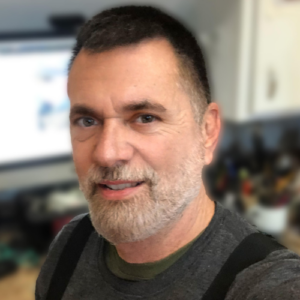
 BILL CHISHOLM (co-facilitator) has been teaching yoga and stress management for 30 years. He is certified in Kripalu Yoga and completed Herbert Benson’s Mind/Medicine course through Harvard. He has also done extensive study and practice in vinyasa, Iyengar, and PNF yoga. He is the former founder of Cape Ann Yoga Center and has taught stress management and yoga at the Marino Health Center in Cambridge and several other medical facilities in the Boston Area. He is a fine art oil painter exhibiting throughout New England and a passionate student of both cello and duduk.
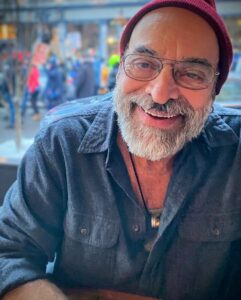
JIM PETOSA (co-facilitator) is Professor Emeritus at Boston University’s College of Fine Arts, where he directed the School of Theatre (2002-2019) and taught through 2023. He served as artistic director of New Repertory Theatre (2012-2018), Boston Center for American Performance (2009-2019), and Olney Theatre Center in the DC area. He is co-artistic director of Potomac Theatre Project/PTP/NYC (1987-present).
A member of Actor’s Equity and the Society of Directors and Choreographers, Petosa is a current board member and past president of Becket Arts Center, chair of Quincy’s LGBTQ+ Commission, and has served on the Board of Governors at United First Parish Church in Quincy, MA.



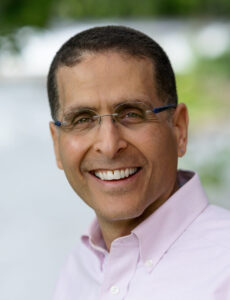
Albert E. Johnson-Mussad first encountered the Rowe Labor Day Retreat for Men Who Love Men in 1999. He has presented at this retreat on eclectic spirituality and our human goodness. Albert comes to chaplaincy from a life in PK-12 schools as a teacher, instructional leader, and school improvement consultant. Albert qualified as an Interfaith Chaplain in a hospital designated as a regional trauma center under the standards of the Association for Clinical Pastoral Education (ACPE), the leading accreditor of chaplaincy education in the U.S. Albert currently works as a chaplain in a hospital setting.
The essence of chaplaincy as I have come to love it is listening and following this person as they are moved to share themselves with me. Building trust by connecting in our shared humanity is essential. Listening deeply, following closely, and building trust gently, as two people finding their way, makes it possible to encourage, build strength, and fortify resilience for each person’s unique and precious journey.
Some define chaplaincy as “care of the soul or spirit,” an orientation that touches me deeply. In a care encounter, my mission of service is to accompany by listening for the soul’s expression: For what is this soul yearning? With what hurt(s) is this soul entrusting and blessing me? What gifts and strengths is this beautiful soul revealing to me? I strive to use what I have heard to upbuild the care seeker, to leave them with new insight and courage on their way. I love being with people like this because I have found the work of caring for souls and spirits to be the deepest and fullest way to love a person.
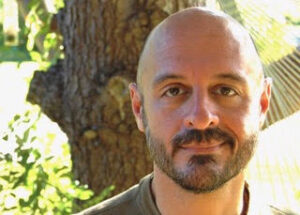
Karl Paulnack, Chaplain
I am a retired classical pianist. I played thousands of concerts throughout the US and Europe as a member of orchestras, director of a conservatory, dean of a college, a professor, and a teacher of pianists, all of which required deep engagement with groups. I love understanding groups, how we move in groups, how we resolve conflicts, provide leadership, and cultivate lifelong relationships. While my work life was spent in music, my true love is “group life.”
I am a clinically-trained, ACPE-accredited hospital chaplain on the staff of the Cayuga Medical Center in Ithaca, NY. As a chaplain I feel most drawn to the emergency room, patients with cancer, and people recovering from addiction. I make my home in Ithaca with Dave, my husband of 34 years, and our dog Mato. I am in a committed, long-term love relationship with Andrew, Cameron and Logan, my “Practice Group”, with the mission of knowing and being known deeply by other men. I also have a hunka, a Lakota word for a “brother closer than blood”, a committed-for-life partnership now in its second decade.
The nature of my spiritual practice is eclectic, mystical, and shamanic (“takes on different shapes in different worlds”). As a member of the leadership team at Easton Mountain in the early 2000s, I co-created the New Year’s Eve Fire Ritual, designed workshops, and led small groups. I came to Rowe a stranger, in 2015, as a keynote presenter of TouchPractice, a spiritual practice of holding others, which I originated and developed. During a ten-year period I held more than a thousand men, one hour at a time, and taught TouchPractice workshops to hundreds of men across the country. Chaplaincy residency in an ER during the COVID pandemic taught me how to “hold” people without touching them, while wearing full PPE. (The most important body part is the heart!) My roots are Catholic, Buddhist, and Unitarian, and my current spiritual practice partners are groups of Quaker, Shoshone and Wampanoag peoples.